


In the food industry, dehydration is a critical process for extending shelf life, reducing storage costs, and creating convenient products.
Among the various methods available, spray drying and freeze drying are two of the most widely used techniques for producing powdered and dried food products.
Understanding Spray Drying
Spray drying is a rapid drying technique in which a liquid food product, such as milk, fruit puree, or coffee extract, is atomized into fine droplets and introduced into a chamber containing hot air. The moisture is rapidly evaporated by heat, resulting in fine, dry particles that are collected as powder. Spray dryers typically use cyclones or bag filters to separate and collect the final product efficiently.
Spray drying is known for its high throughput and cost-effectiveness. It allows for continuous processing, making it ideal for large-scale food production. The process is particularly suitable for products with low to moderate heat sensitivity, such as dairy powders, powdered flavors, and instant beverages. Spray drying also offers excellent control over particle size, density, and solubility, which is essential for ensuring product consistency.
However, because spray drying involves high temperatures, some sensitive nutrients, flavors, and volatile compounds can be degraded during the process. This can limit its use for delicate foods, such as certain fruits, probiotics, or heat-sensitive bioactive compounds.
Understanding Freeze Drying
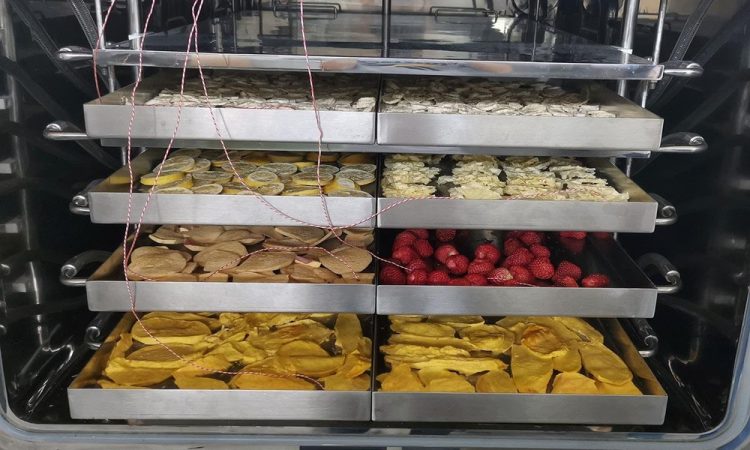
Freeze drying, also known as lyophilization, is a low-temperature dehydration method that preserves food by removing moisture under vacuum. In this process, the product is first frozen, and then the ice is sublimated directly into vapor in a controlled vacuum environment. Unlike spray drying, freeze drying does not rely on heat to remove water, which helps preserve the food’s structure, flavor, and nutritional content.
Freeze-dried products retain their original shape, color, and taste, making this method ideal for high-quality foods like fruits, vegetables, coffee, and ready-to-eat meals. Because the process preserves sensitive bioactive compounds, freeze-dried foods are often considered superior in nutritional value compared to those produced by heat-based methods.
The primary limitations of freeze drying are its high cost and longer processing time. Freeze dryers require significant energy to maintain low temperatures and vacuum conditions, and the batch processing nature of most freeze dryers reduces throughput compared to continuous spray drying. These factors make freeze drying more suitable for premium products, specialty foods, or ingredients requiring maximum nutrient retention.
Key Differences and Considerations
When comparing spray drying and freeze drying, several key factors should be considered:
- Temperature Sensitivity – Spray drying exposes products to high temperatures, which may break down heat-sensitive compounds. Freeze drying preserves delicate flavors, nutrients, and textures due to low-temperature processing.
- Processing Speed and Cost – Spray drying is faster and more economical, suitable for large-scale production. Freeze drying is slower and more expensive but produces higher-quality products.
- Product Characteristics – Spray-dried powders are generally dense and soluble, ideal for instant beverages and seasonings. Freeze-dried products are porous, lightweight, and retain their original shape, making them excellent for snacks and premium ingredients.
- Shelf Life – Both methods significantly extend shelf life by reducing moisture content, though freeze-dried products often retain a longer shelf life due to minimal degradation and oxidation.
- Applications – Spray drying is widely used for dairy powders, coffee, and flavorings, while freeze drying excels in fruit and vegetable powders, high-value pharmaceuticals, and specialty foods.
Conclusion
Both spray drying and freeze drying offer unique advantages in food production, but the choice depends on the product requirements, cost constraints, and desired quality.
Spray drying is ideal for large-scale, heat-tolerant products that require quick processing, while freeze drying is preferred for premium, delicate, and nutrient-sensitive foods.

A Guide to Bozeman Taprooms for Food, Beer and a Night Out

You want a taproom plan that delivers great beer, real food, and a relaxed night with friends. I study taprooms...

Restaurants on the Costa del Sol: where to eat along Spain’s sunny southern coast


Most people arrive on the Costa del Sol expecting beach bars, sangria and tourist menus. And yes, all of that...

Polynesian Fire Luau Myrtle Beach: Show Details, Menu, and Visitor Reviews
What Is Polynesian Fire Luau in Myrtle Beach? Polynesian Fire Luau is a unique dinner theatre experience in Myrtle Beach,...

Why SMS Loyalty Programs Are a Win-Win for Restaurants – 10 Powerful Reasons They Drive Explosive Growth
In today’s competitive dining industry, restaurants need more than great food to succeed. They need strong relationships with their customers....